
Everyone Deserves an Address
Inside 5North’s Mission to Rewire Australian Housing
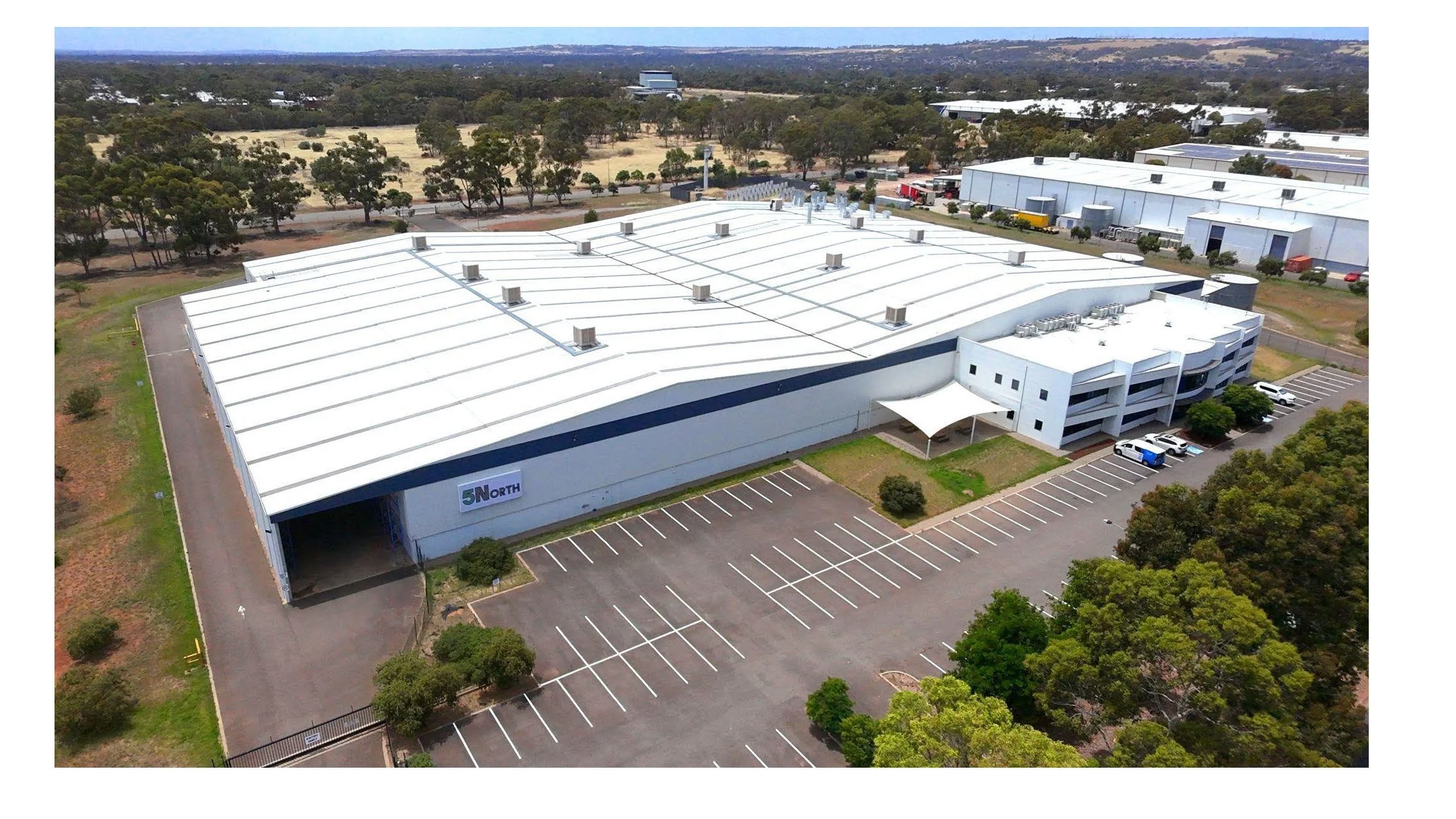
A South Australian startup is building one of the world’s most advanced prefabricated panel manufacturing facilities — and its founder says the housing crisis demands nothing less.
Words: Alicia Brown
5North founder Wayne Hughes was running along the Linear Trail beside the River Torrens in Adelaide when he noticed the tents. First one or two, then more — appearing week after week along the riverbank in a city that had never seen rough sleeping at this scale.
Hughes and his wife, Nicola, who both volunteer at a local soup kitchen, found the conversation around them echoed their own concern — but nobody seemed to know where to start. “Everyone felt strongly that something needed to be done,” he recalls. “And so my wife and I thought about what’s driving this. We think it’s housing. What can we do differently?”
What followed was three years of research, risk-taking, and 5North was born from what Hughes describes as a “this is dumb, we should just use robots” revelation. The result is an advanced manufacturing business in Adelaide’s northern suburbs that is installing one of the most sophisticated robotic prefabricated panel production lines in the world, with first saleable product targeted for August 2026.
From COVID to KUKA
The seeds were planted during the pandemic. Hughes, watching material price volatility and labour shortages bite the construction sector, began researching how other countries drove housing supply differently. “Sadly, a lot of the answers are abroad for this sort of thing,” he says. “I believe the solution lies on the supply side.”
The original plan was to import prefabricated components from international factories — 5North had signed exclusivity arrangements with several overseas fabricators — then invest in domestic robotics. But the research kept pointing toward a more ambitious path. “We realised the change needed to be quite radical,” he says. “It was never going to be basic machinery with some tradespeople under roof.”
That path led to KUKA, the German robotics and automation giant. In December 2024, 5North signed a proposal with KUKA and spent the following eight months in intensive engineering sessions — Tuesday and Thursday nights, four hours at a time — adapting the technology for Australian residential construction. “They had incredible expertise in robotics automation,” Hughes explains, “but they knew very little about residential construction here in Australia.”
The collaboration was accelerated by circumstance. When a UK-based modular manufacturer — which had ordered KUKA robotics before winding down its operations in late 2024 — folded, 5North approached KUKA about re-engineering the existing brand new hardware for Australian conditions. “That allowed us to bring our manufacturing horizon forward quite significantly,” Hughes says. The hardware suited their purposes, though the software had to be completely reworked. “You build differently in the UK than you build here.”
104 Metres of Robotic Precision
The 5North Advanced Manufacturing Facility sits on a 46,000-square-metre site in Edinburgh, near the RAAF base north of Adelaide, with around 12,000 square metres of production space under roof.
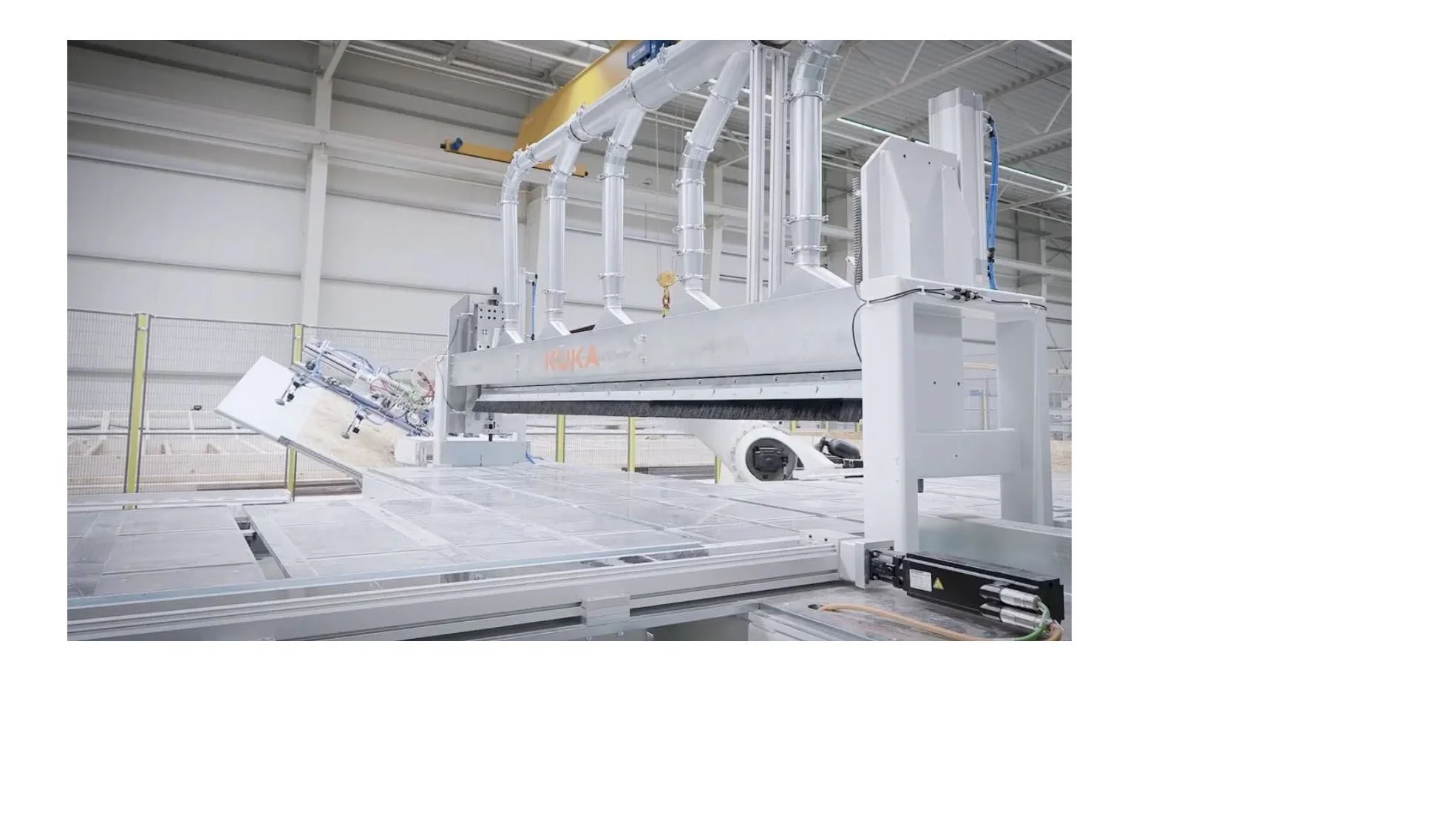
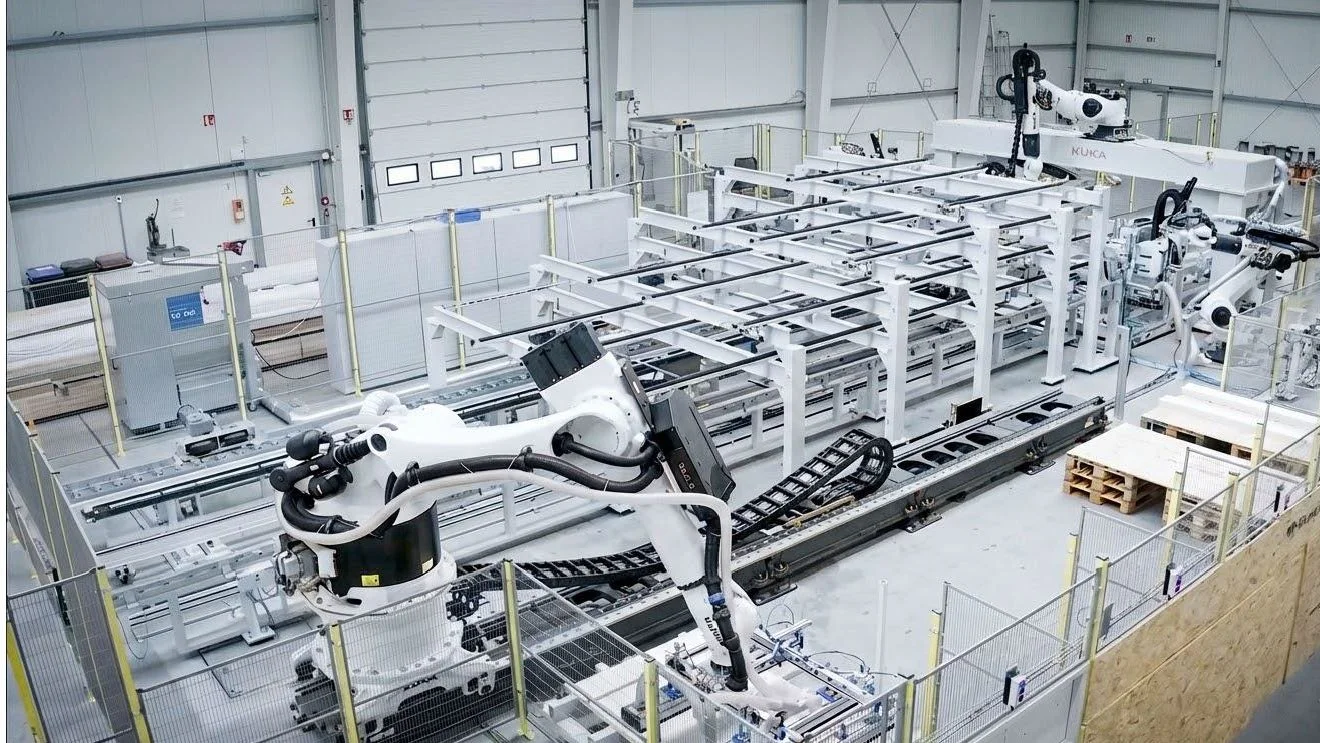
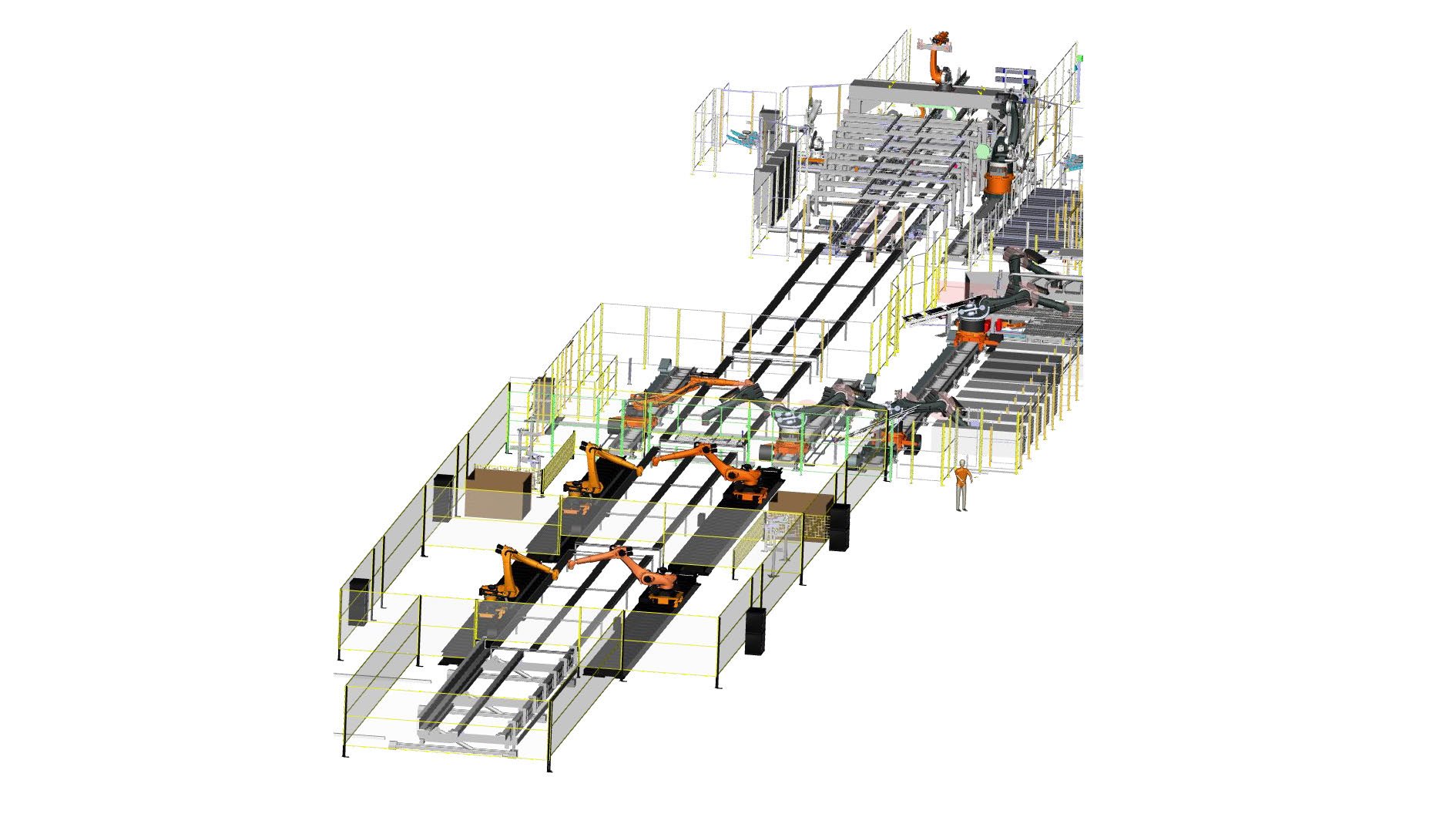
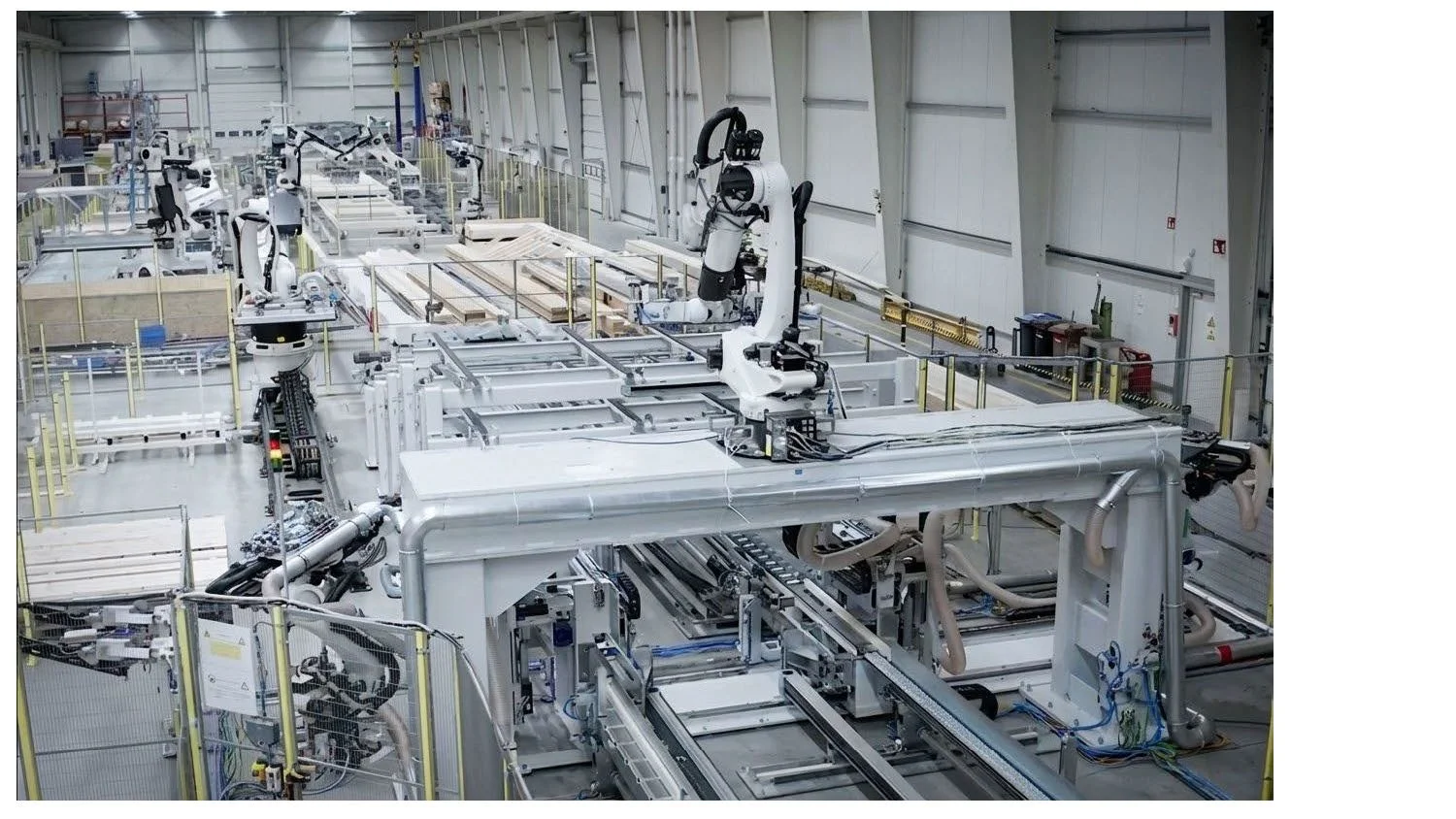
At its heart is a 104-metre robotic production line — roughly the length of a football pitch — with 14 industrial robots across six automated stations. Australian-produced radiata pine enters the facility and passes through a Hundegger automated saw, processing around 4,000 cuts per day. Pre-cut timber feeds into framing stations; sheeting products into sheeting stations; carpenters prepare sub-assemblies for windows and doors. The robots then frame, square, glue, sheet, fasten, route, and mill each panel before it discharges into four integrated mechanical, electrical, and plumbing lines, where operatives complete services work.
The average cycle time is 10 minutes per finished panel, with a maximum throughput of 37.2 square metres of completed product per cycle. On a standard 38-hour, four-day working week across 48 weeks, the facility can produce components for approximately 1,000 homes per year. With a three-shift operation, that rises to around 3,000.
The first containers of equipment were expected to arrive as Smart Building Review went to press, with installation, commissioning, and testing keeping the facility on track for first saleable product in August 2026.
Supplier, Not Builder
Hughes is emphatic on one point: 5North is not a builder. It is a specialist supplier of prefabricated wall, floor, and ceiling components to builders, developers, and housing programs.
“If we were the builder with a capacity of 3,000 homes per year, that would make us one of the largest builders in the state overnight,” he says. “Which is completely ridiculous as a viable business model. To be impactful and to offer the industry the opportunity to be more impactful as well, we wanted to work with a wider range of clients.”
Clients bring their own designs. 5North’s DfMA team, led by Alessandra Yokota, value-engineers those designs for manufacturing efficiency, sometimes with remarkably subtle interventions. Hughes describes one project in which reducing the height of a first-floor external wall by 28 millimetres had a profound impact on costs and site speed. In another, moving an internal staircase just 23 millimetres unlocked significant manufacturing efficiencies. Once designs are optimised, they are converted into machine language that feeds a Siemens platform driving the robotic line.
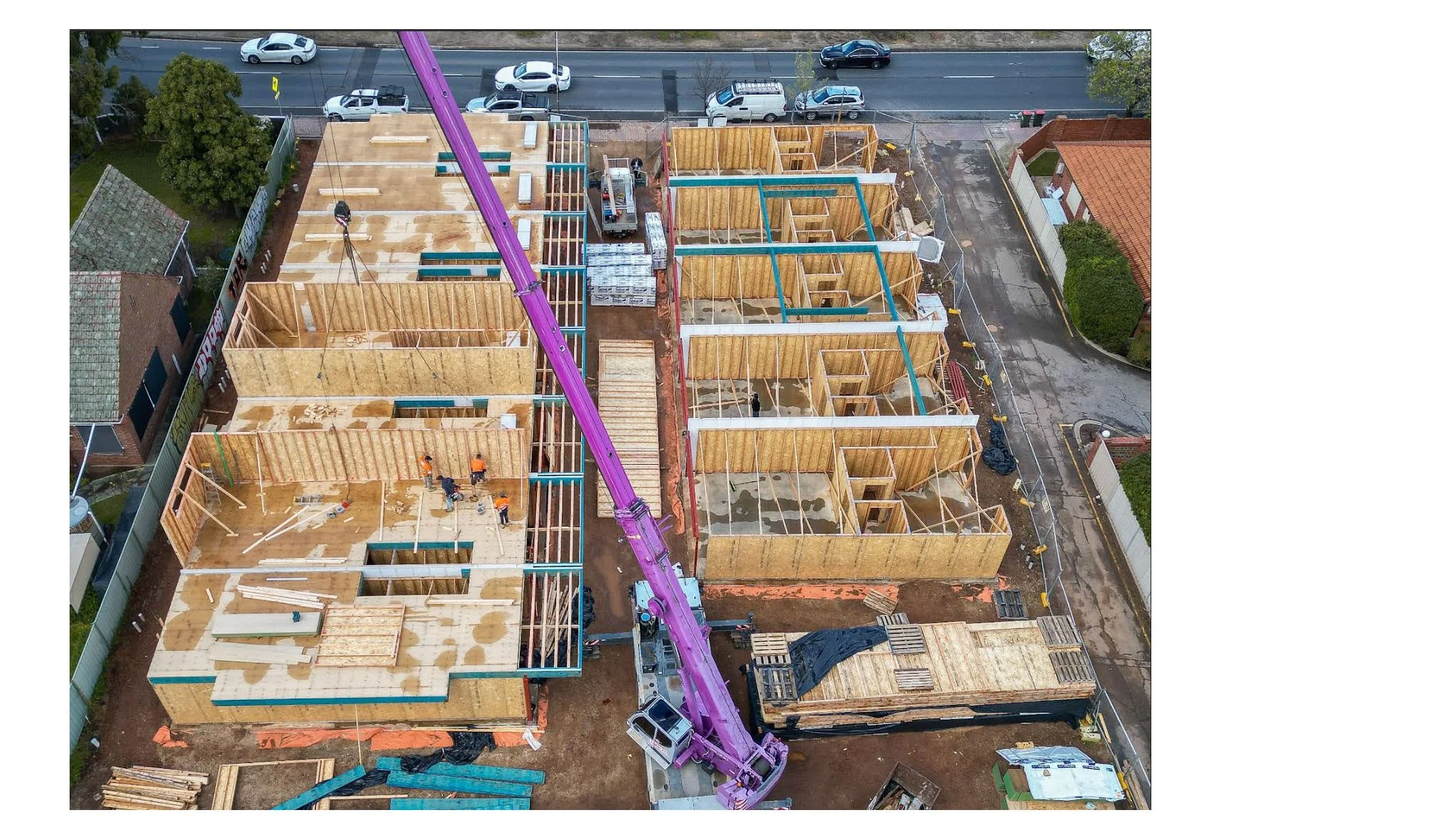
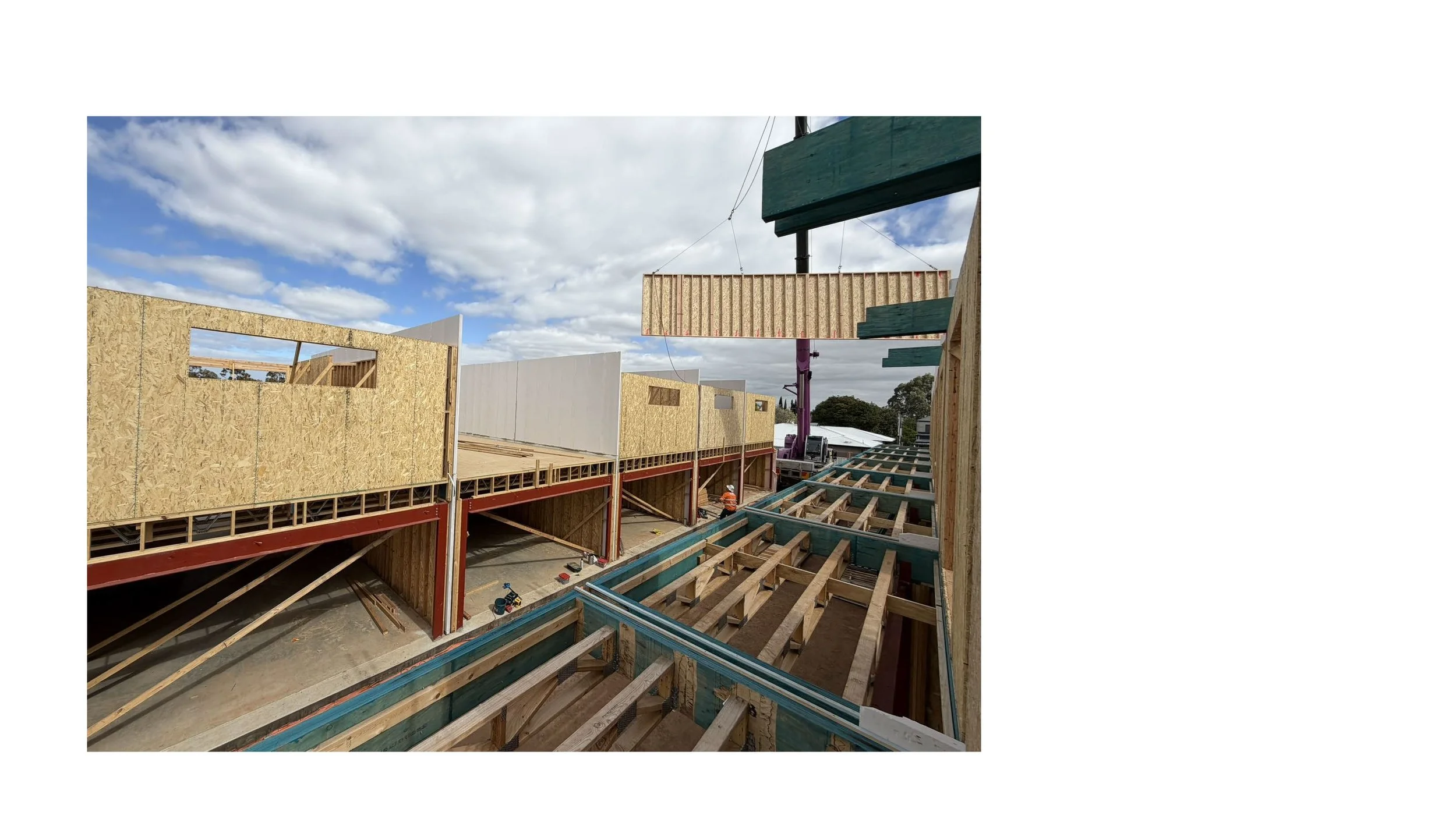
The output ranges from basic framing through to fully clad panels with external cladding, battens, membrane, insulation, first fix electrical and windows and doors hung, the scope determined by what each builder wants from the factory versus the site. On pricing, 5North has entered the market at parity with traditional procurement. “The difference is time and certainty,” Hughes says. “You put a piece of wood on our line, ten minutes later, you have a panel.”
Purpose-Driven, Commercially Grounded
5North was established by a group of South Australian private investors, supported by the Commonwealth Bank of Australia (CBA) — remarkable, Hughes notes, for a business that is, by any measure, a startup. “I cannot say enough about CBA really walking the walk” on social licence, he says. The company’s environmental commitments are backed by third-party audits against ESG metrics, and 5North is commissioning Australian-specific lifecycle assessment data to complement its existing UK-benchmarked performance claims of more than 80 per cent less embodied carbon and 90 per cent less waste.
The timber-based material system is deliberate. “You don’t get much in the way of sequestered carbon and whole-of-life embodied carbon from steel as you do in timber,” Hughes explains. “If you’re going to go down this path of industrialisation, you may as well pick up all of the different benefits.” The company is committed to local content procurement, sourcing Australian-produced pine, and engaging supply chain partners on issues such as formaldehyde in sheeting products.
5North are equally deliberate about the workforce. “We’re absolutely not about replacing trades,” he says. “Carpentry is a huge part of our building industry. Carpenters should be working with timber — that’s what they do.” The factory model shifts repetitive, physically demanding work into a controlled environment, while qualified trades on site focus on skilled installation. The four-day working week is a deliberate choice — and 5North sees the model as opening doors that traditional construction has kept closed. With women comprising roughly three per cent of trades nationally, he points to a US partner factory operating with 36 per cent female operational workforce as evidence of what becomes possible in a risk-engineered manufacturing setting. Three of 5North’s five senior leaders are women — not by design, Hughes says, but by hiring the right person for the right job.
Scaling the Mission
5North is already working with developers and builders in South Australia, including those on the SA Housing Trust’s panel, and is involved in active tenders. The company has engaged with Renewal SA and community housing providers through the Housing Australia Future Fund. 5North are circumspect about naming clients — NDAs are in place — but confirm the business has engaged with government at all levels to communicate its advanced manufacturing investment in the state.
The national ambition is clear. “We’re not set up like the US, where you could drive three hours in any direction and hit another big city,” he says. “If you’re going to be real about cost, when you add freight on, you’re starting to not be real. If you’re going to be real about ESG and you want to freight things across the country, that is not the best way to look after your carbon footprint.” The answer is more factories. 5North’s goal is at least three additional facilities on the ground by 2030 — a timeline the 5North team describes as “a scary goal” that “really focuses the mind.” Crucially, the engineering work in Adelaide is already shortening lead times: “The timeframe for factory two, three, or four to production is almost half of where we started.”
5North recently joined prefabAUS — a decision Hughes describes as straightforward. “They’ve been influential and successful in driving change already. Having people out there who have got your back, advocating on your behalf as an industry — all credit to prefabAUS.”
Asked what one thing 5North would change, Hughes points beyond the build itself to the planning, consents, and approvals that precede it. “Let’s make it simpler to get to construction,” he says — a message that echoes prefabAUS’s own advocacy priorities.
It speaks to a founder who sees the venture not as a silver bullet, but as one essential part of a larger transformation. “5North will never be the silver bullet, and we’re not pretending to be,” he says. “But we have a part to play. It was a risk, and it remains one we believe we have to take. We believe ‘Everyone deserves an address”, so if you’re going to do anything in this space to be impactful, we just don’t see how else you do it.”