
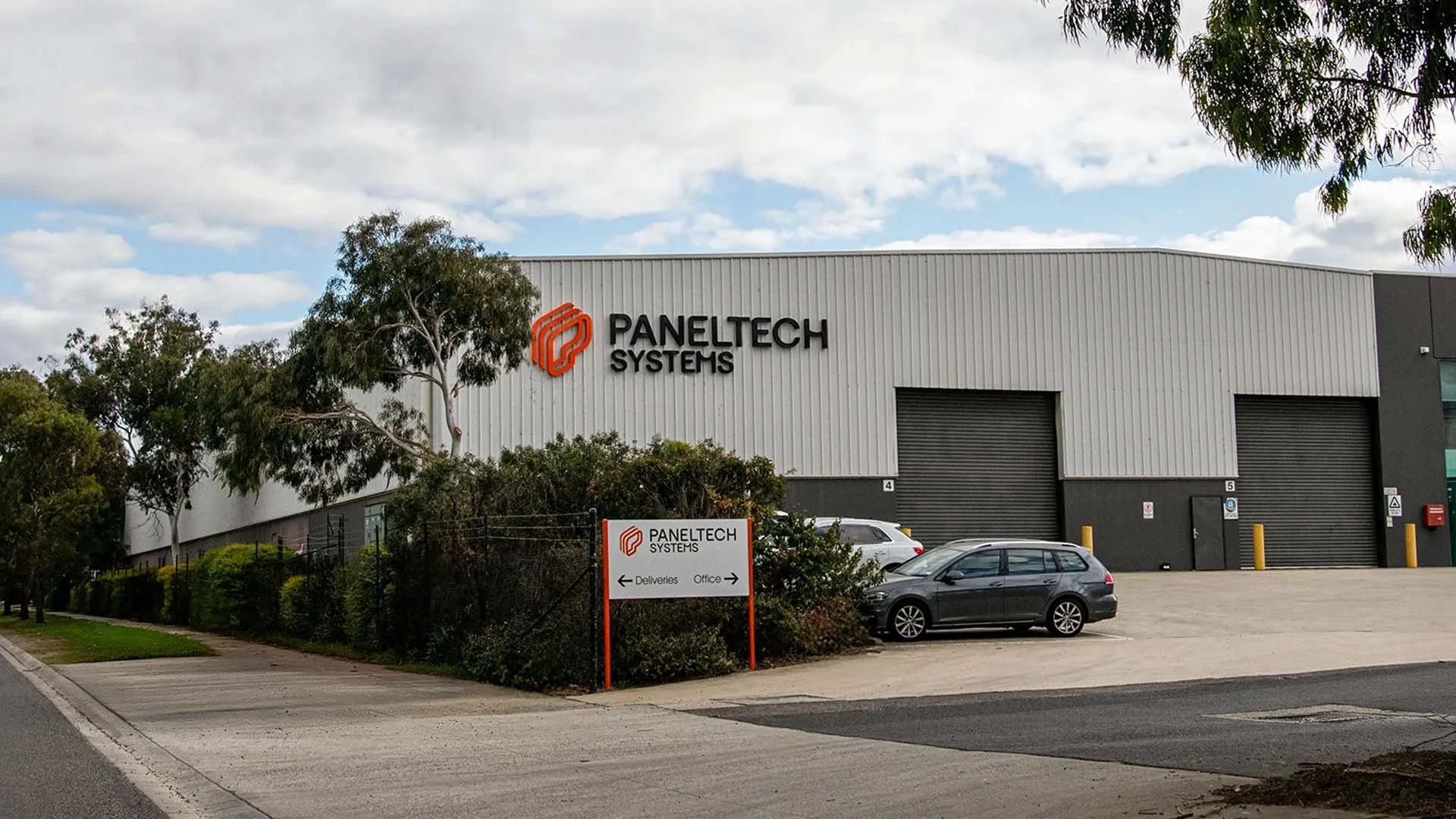
In a market where imported SIPS panels arrive one at a time and builders remain deeply sceptical, an emerging Melbourne manufacturer is assembling complete wall sections in-factory and erecting entire homes in 48 hours — then daring the industry to look away.
PanelTech exists because a property developer got tired of waiting. Founded in 2024, the Victorian SIPS manufacturer grew out of a partnership with Miravour Property Group, whose director had watched traditional build programs blow out from eight months to twelve — and decided there had to be a faster way. For founder James Coghlan, that frustration became a business case.
“He was a forward-thinking developer who was willing to get involved with this construction method,” Coghlan says of the relationship that gave PanelTech both its founding capital and, crucially, a guaranteed pipeline of work at the Cobblebank estate, 33 kilometres west of Melbourne’s CBD in the fast-growing City of Melton — more than 300 lots that would become the company’s proving ground.
A Kit of Parts, Not a Box
PanelTech positions itself as a “kit of parts” company rather than a modular builder — a distinction Coghlan is keen to draw. Where modular delivers completed volumetric units, PanelTech manufactures complete wall sections pre-cut for windows, doors, and services, then ships them flat-packed for crane installation. The approach preserves design freedom while capturing off-site speed.
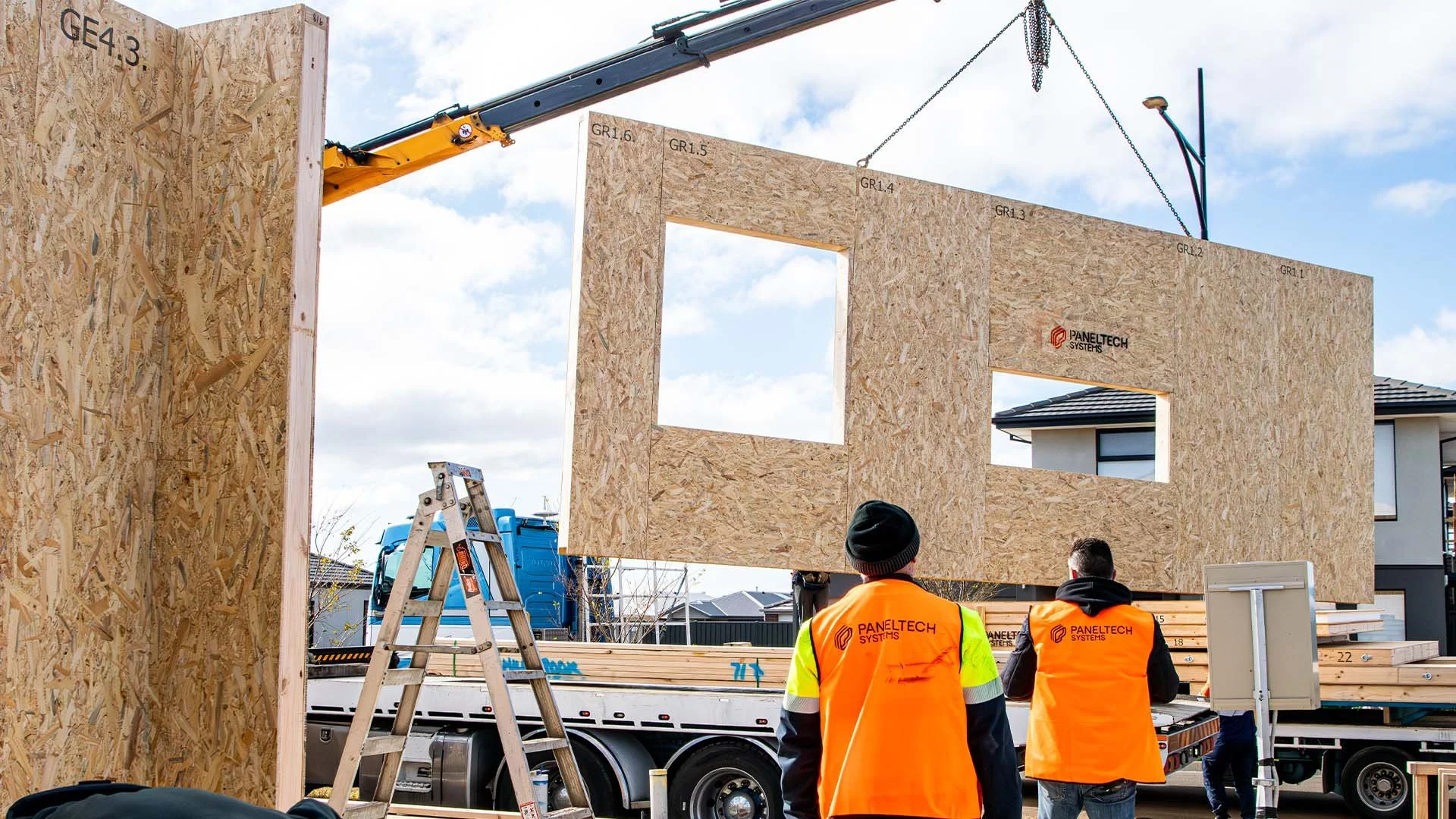
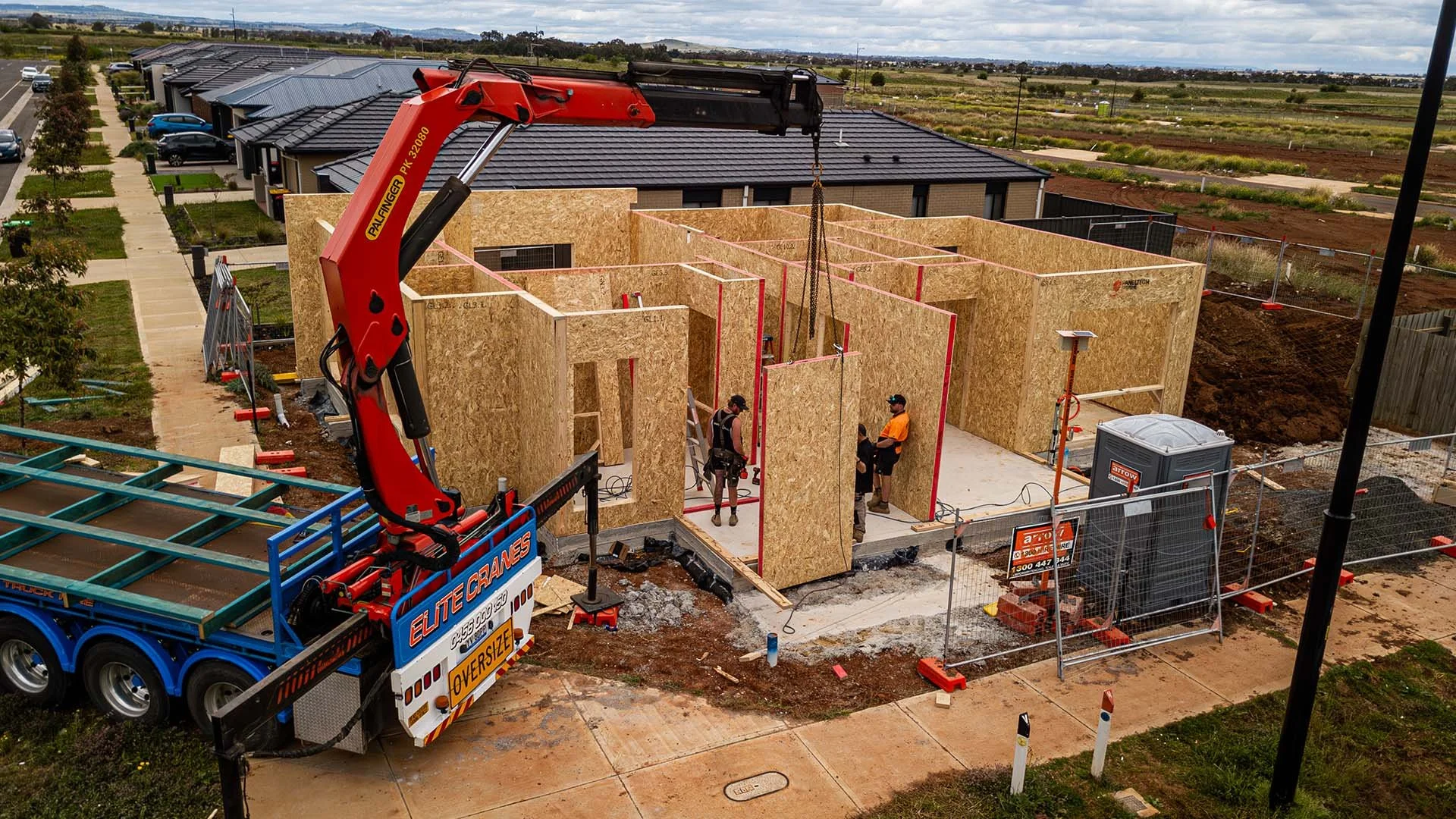
The company claims to be the only Australian manufacturer delivering SIPS as fully assembled wall sections. Imported panels, constrained by shipping container dimensions, must be installed one at a time. PanelTech’s locally manufactured sections allow entire walls to be dropped onto bottom plates in a single crane lift.
“It’s not physically intensive,” Coghlan explains. “You’ve got a crane lowering walls, you’re nailing off — as opposed to some of these panels that can be upwards of 70 kilos each. I wouldn’t want to be the tradie lifting 70-kilo panels for eight hours a day.”
From Drawing to Delivery
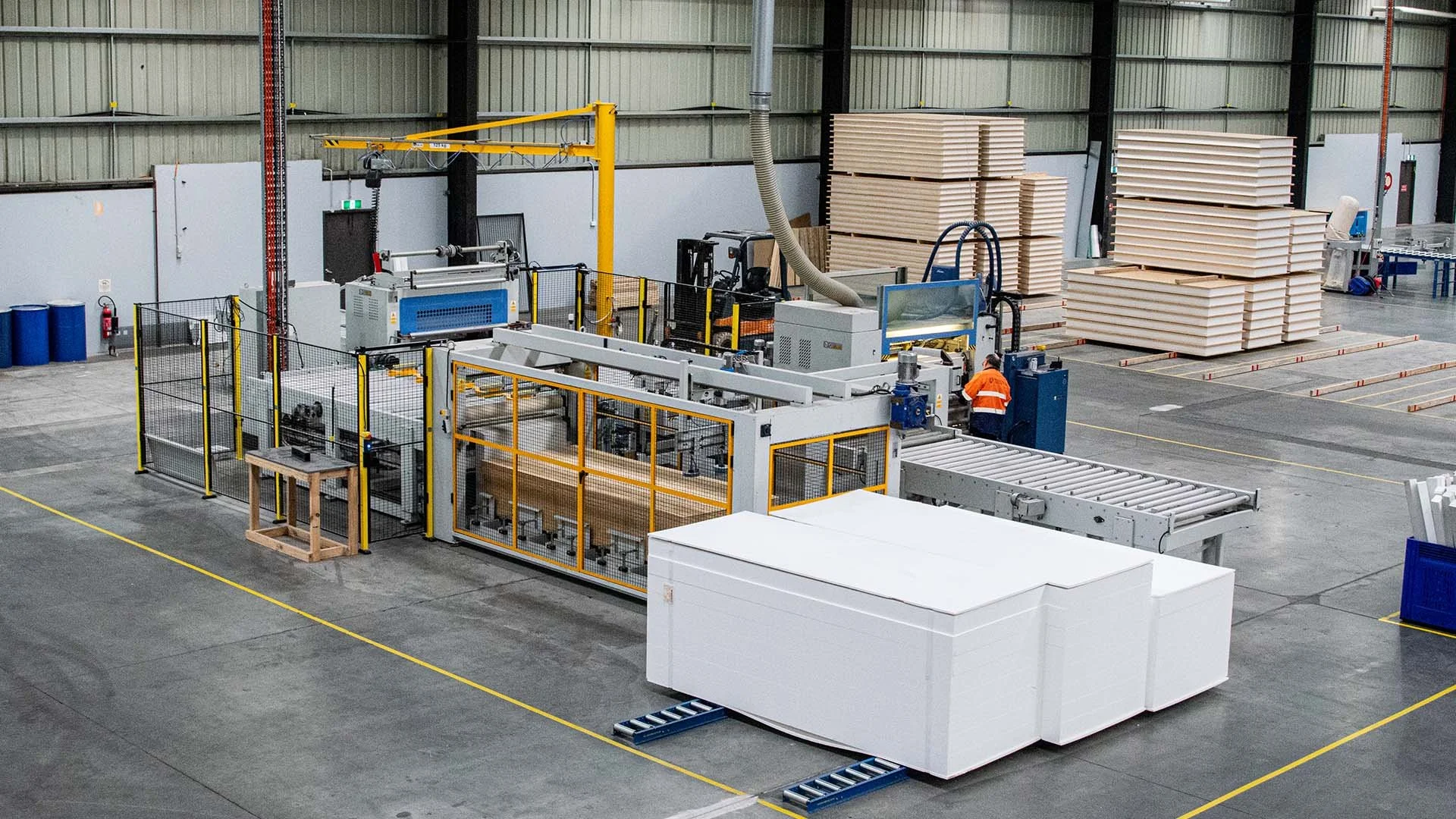
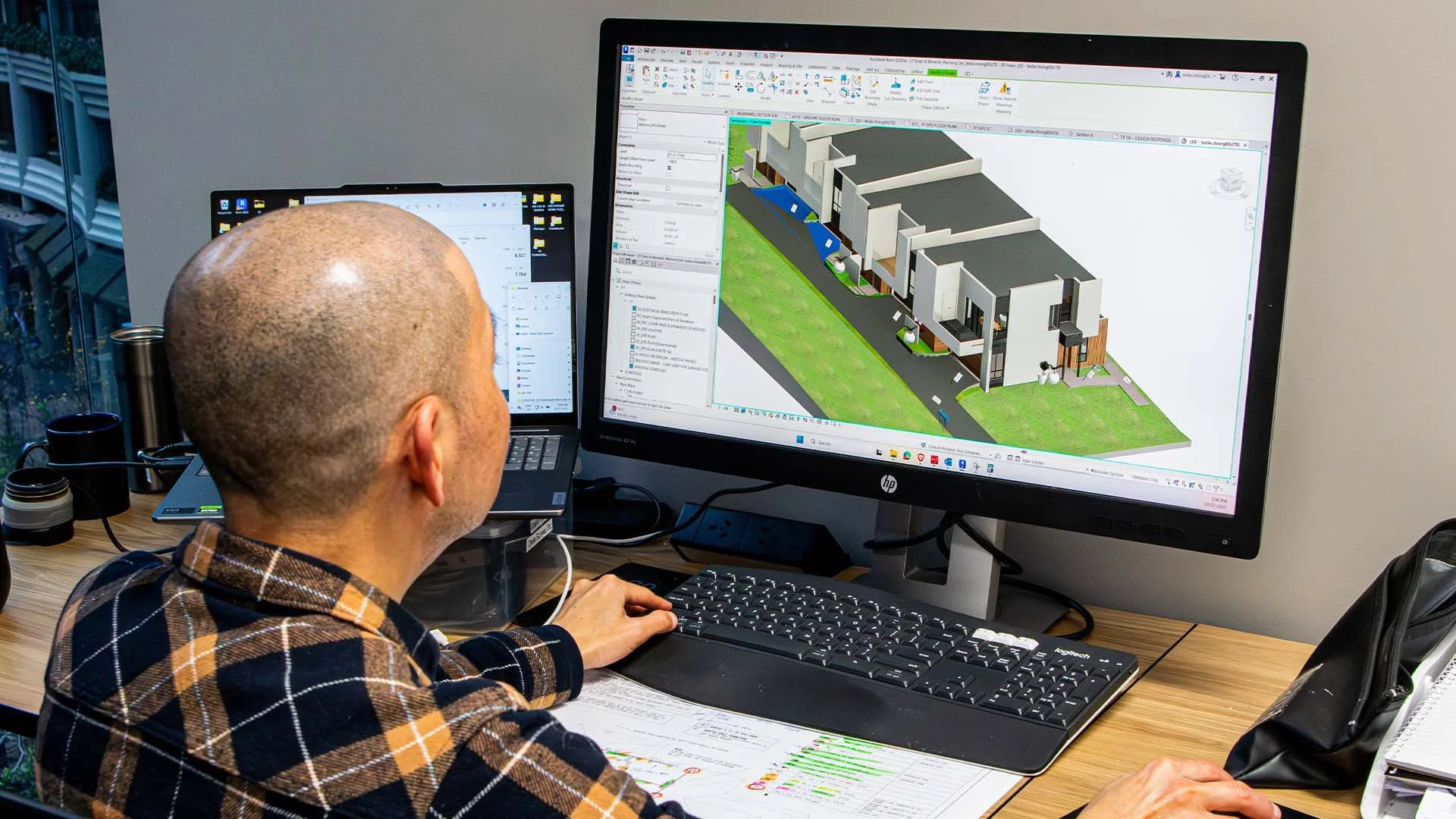
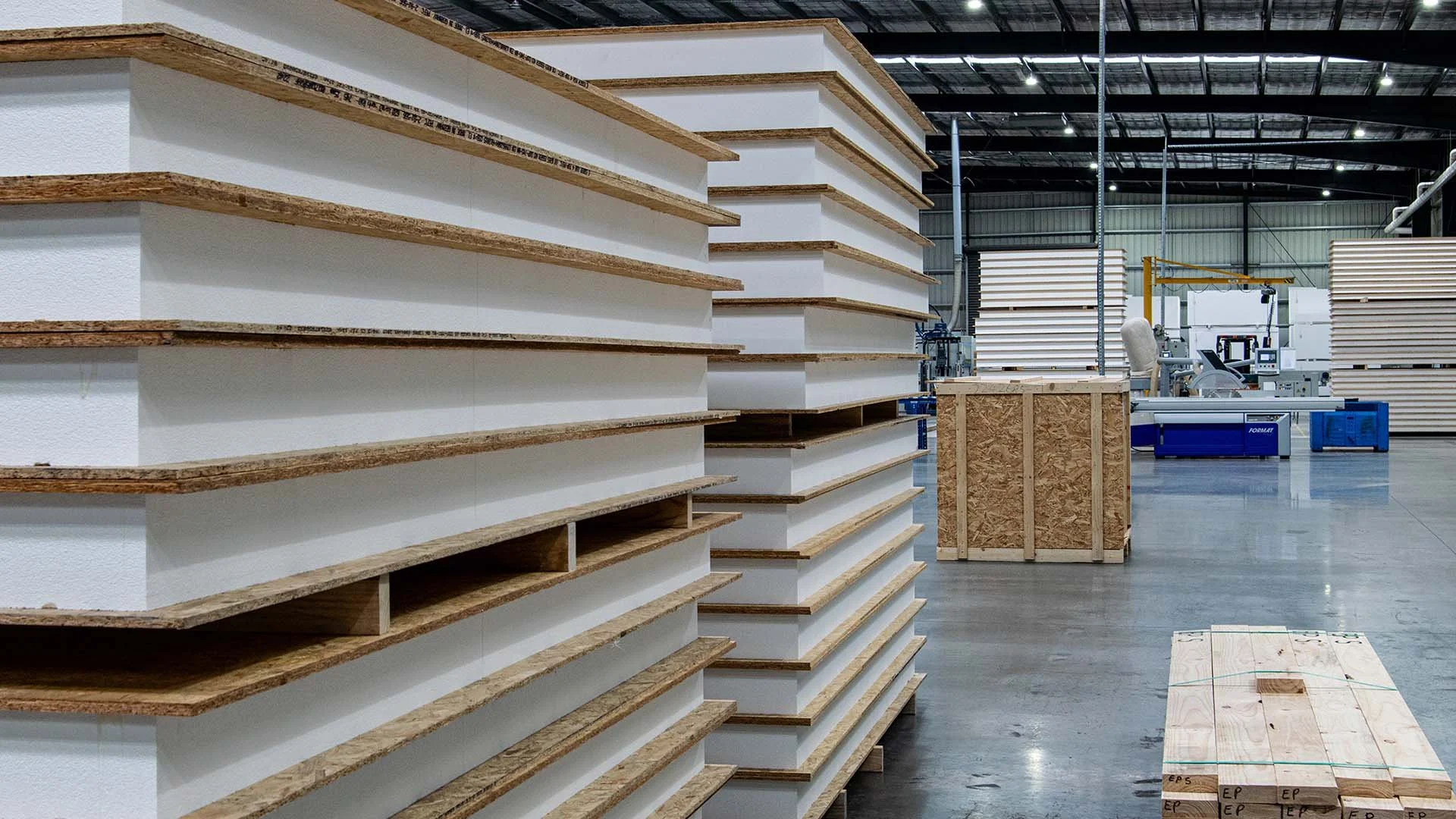
At the heart of the operation sits a million-dollar Spanish lamination machine that bonds EPS foam cores to structural skins using hot-melt adhesive, producing up to 180 panels per day on a single shift — enough for two to three complete homes. Architectural drawings are translated into a SIPS takeoff specifying every panel size, cut list, and service core, with electrical and plumbing pathways cored directly through the foam in the factory.
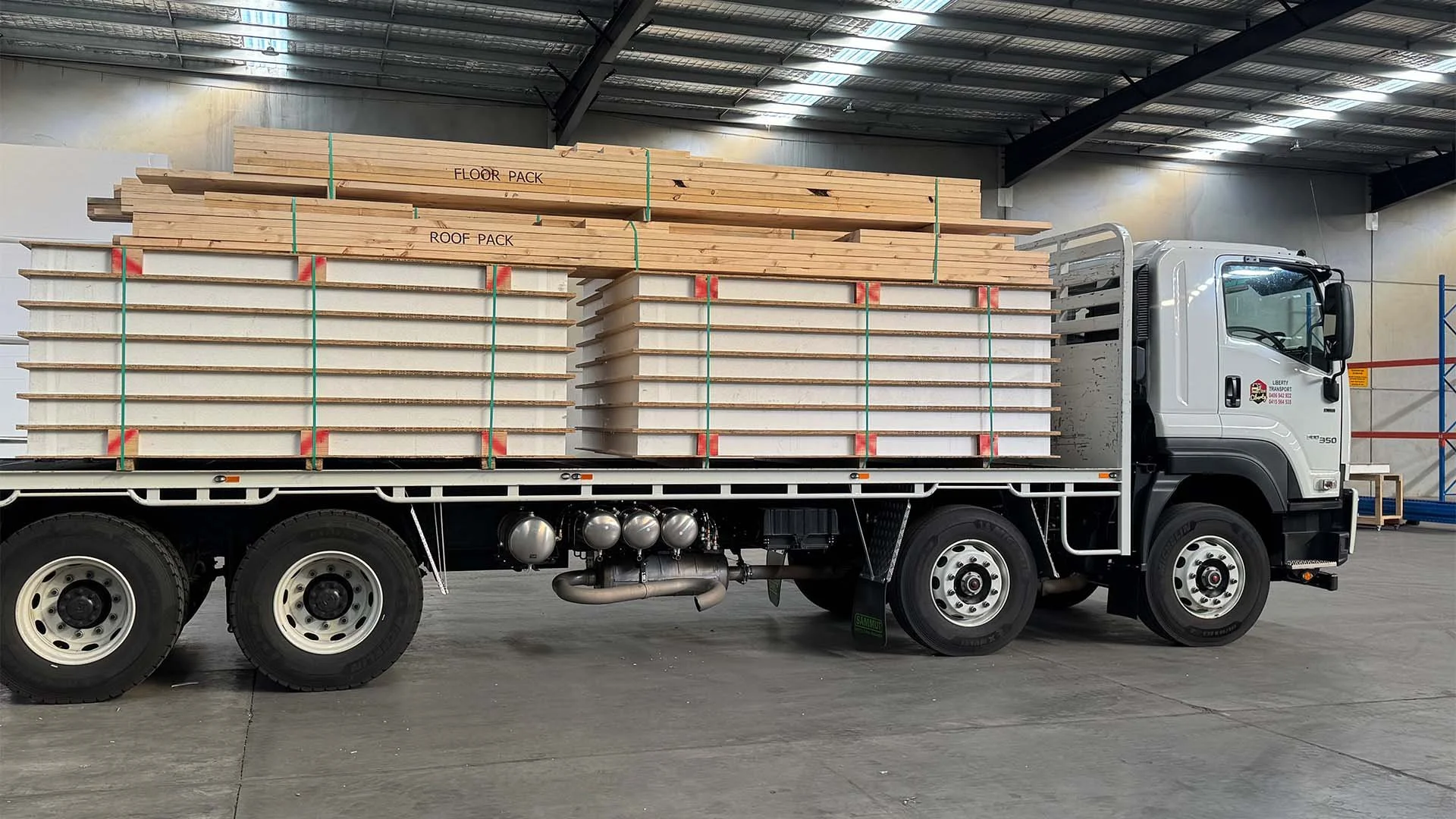
From there, panels move to cutting and assembly, where they’re built into complete wall sections, flat-packed onto pallets in installation sequence, and loaded onto crane semi-trailers — numbered walls, stacked in erection order, with a floor-plan guide any competent crew can follow.
Coghlan is refreshingly candid about what still needs work. The transition from lamination to assembly remains a bottleneck — cutting is manual, and nailing is done with traditional guns from a ladder. Conveyor systems, automated cutting, and rail-mounted nailing machines are on the horizon for investment. “We’ve spoken with government bodies about trying to get some sort of incentive to invest in that,” he says. “We’ll see what happens.”
Proving It at Cobblebank
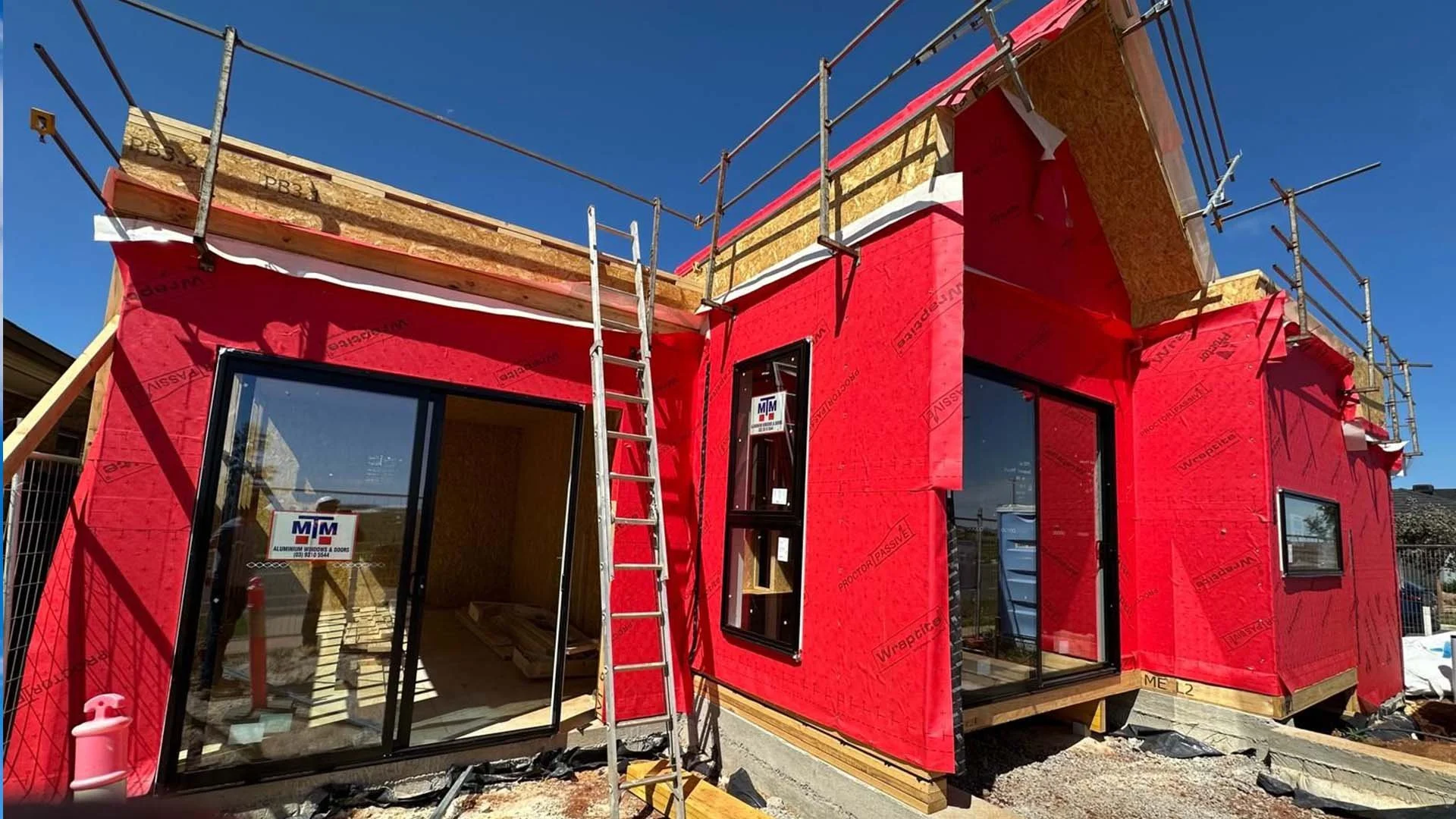
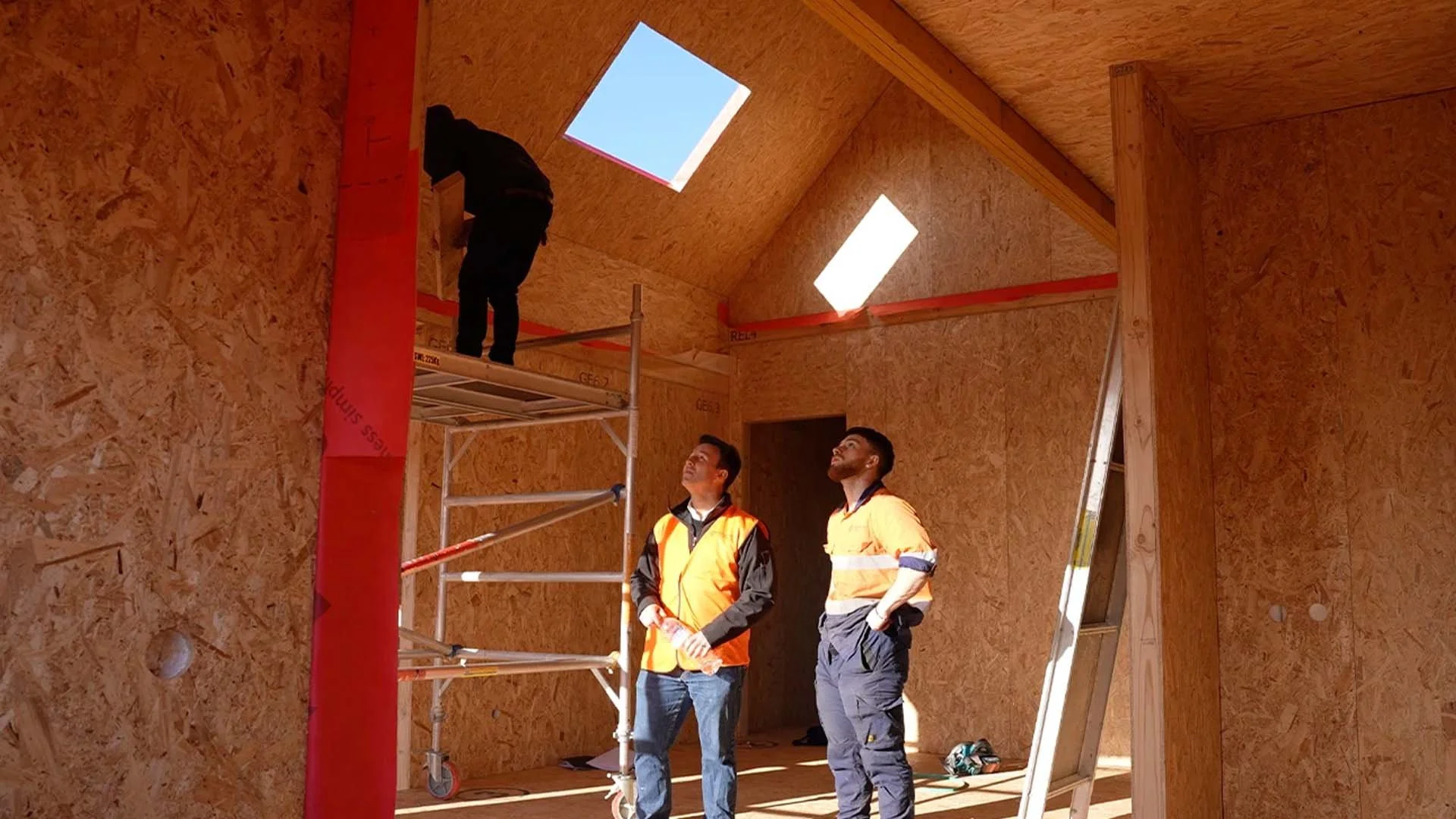
The Cobblebank development has been PanelTech’s laboratory and showroom in one. Rather than playing it safe with the flat-roofed boxes the market associates with prefab, Coghlan pushed his architects toward gable roofs, skillion roofs, and vaulted ceilings — deliberately challenging perceptions.
“A lot of people have walked into these houses, had a look at these massive vaulted ceilings, and thought, okay, this is great,” he says. “Once the house is ready, you wouldn’t know the difference [from a traditional build], apart from the fact you can feel [the insulative and acoustic properties] when you’re in there in terms of livability.”
The numbers tell their own story. Five homes completed, with a sixth imminent. Slab to lock-up achieved in two days. A target total build program of three months, against the eight-to-twelve-month traditional benchmark. And a minimum 7-star energy rating straight off the production line, without solar or additional measures — at a time when many conventional builders are struggling and spending heavily to meet that same threshold.
"They can put three claims in the space of a week," Coghlan says. "There's no having to delay because we're not cash positive. With our construction method and enclosed structure, you can send in the internal trades the following day – meaning no onsite delays and builders with predictable programs."
Building the Workforce from the Factory Floor
With Australia short approximately 90,000 tradespeople, PanelTech’s system has been deliberately designed to lower the skills barrier. A site crew needs just one qualified carpenter to lead; apprentices learn the numbered-wall installation process on the job. The company also employs qualified carpenters in its factory, bridging site knowledge and manufacturing quality, and is exploring a dual-role model where factory staff travel to the site for installation, reducing reliance on scarce, expensive site labour.
Longer term, Coghlan has ambitions to develop SIPS installation as a TAFE course module in partnership with prefabAUS, a formal training pathway that could feed both PanelTech’s growth and the broader Smart Building workforce pipeline.
What Comes Next
Current capacity sits at around 100 homes per year, with plans to scale to 200 by FY26. Coghlan sees medium-density townhouses as the greatest growth opportunity — the repetitive box-on-box geometry plays directly to SIPS’ strengths. Interstate expansion across the eastern seaboard is the five-year vision.
Three to four builders are now working with the product, some drawn by their own curiosity, others pushed by clients who’ve seen the time-lapse footage and want in. It’s early days, and Coghlan knows it. But at Cobblebank, the evidence is going up in two days flat — and it’s getting increasingly hard for the industry to look the other way.