
Roadmap in Action
Where Industry Meets Education: Inside Australia’s First National Centre for Smart Building Skills
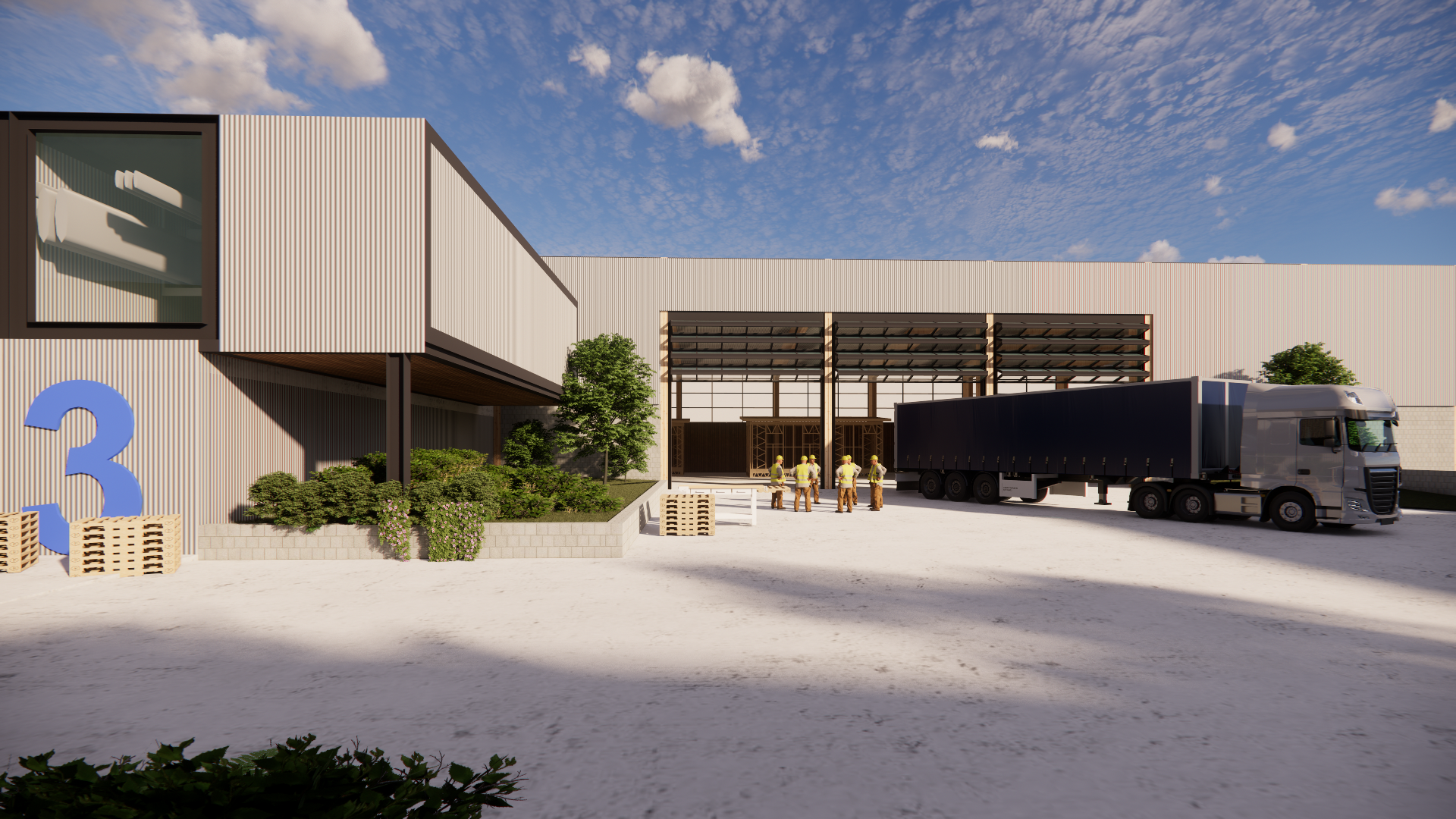
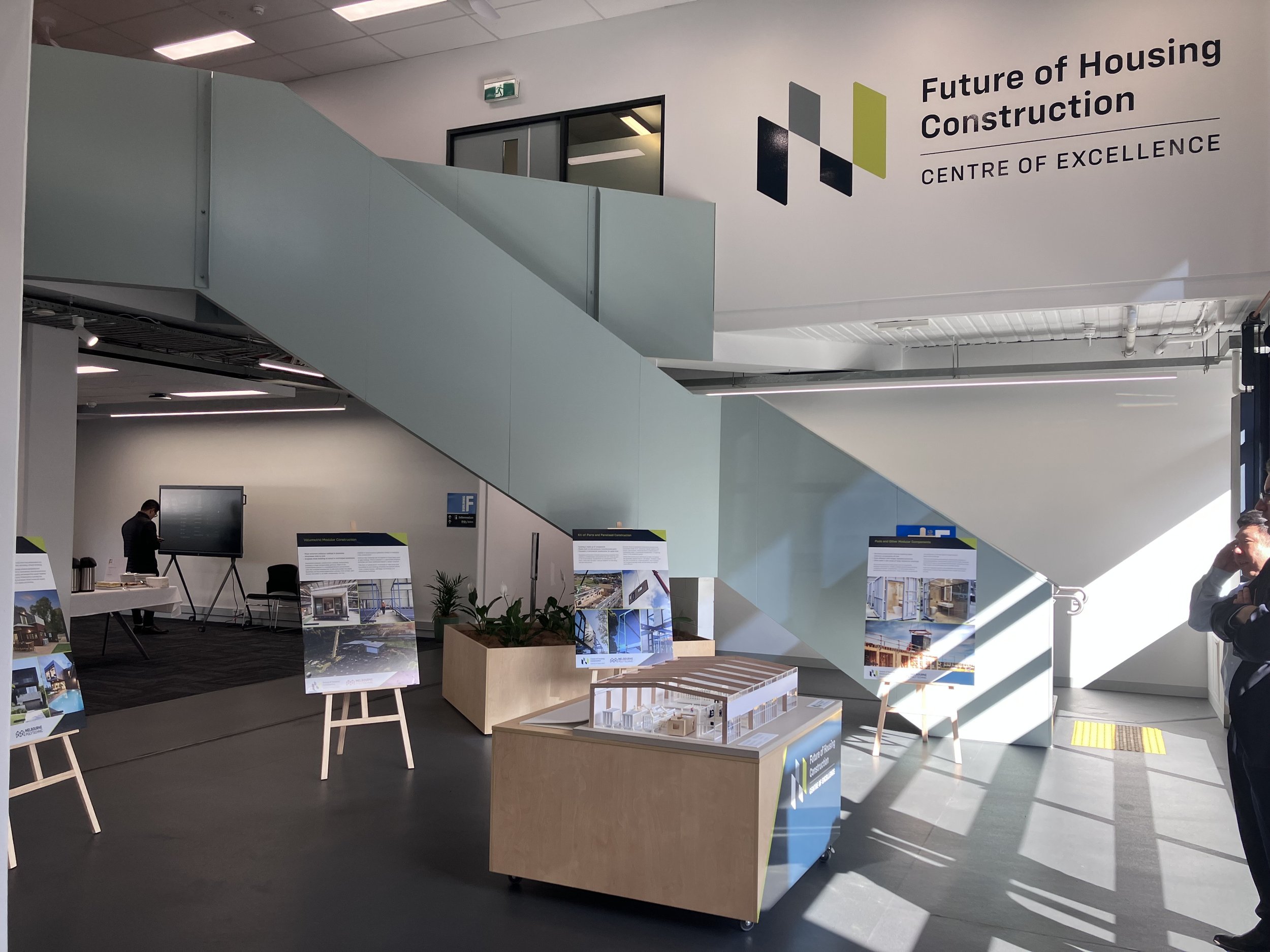
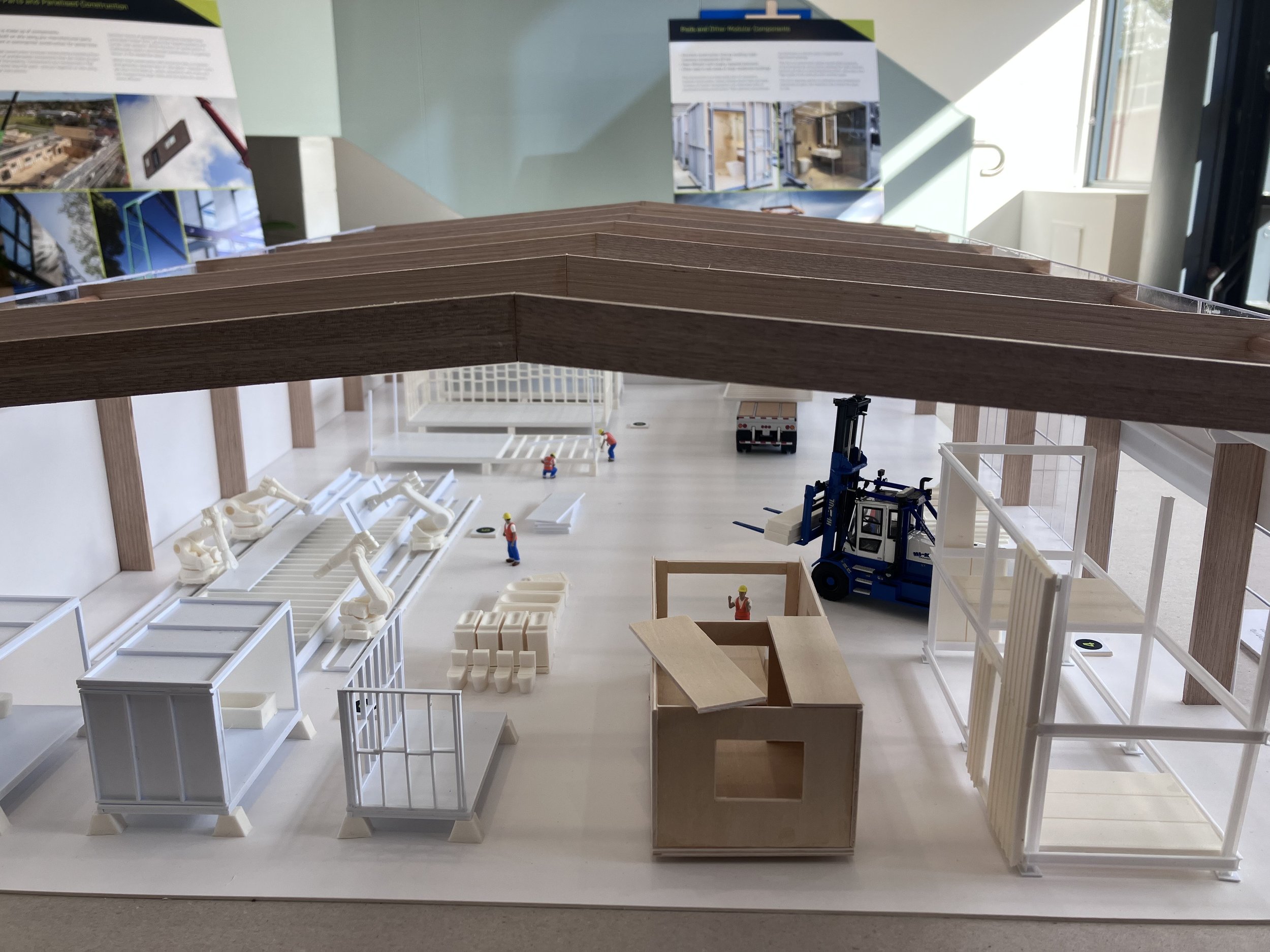
Melbourne Polytechnic’s Future of Housing Construction Centre of Excellence, which includes a showcase building at the Institute’s Heidelberg campus, is a $50 million investment in Australia’s Smart Building workforce. Born from a convergence of industry vision and educational ambition, and anchored by a partnership between prefabAUS and one of the nation’s leading TAFE organisations, the Centre aims to become the engine room for a new generation of construction professionals.
The partnership between prefabAUS and Melbourne Polytechnic’s Centre of Excellence in the Future of Housing Construction grew from parallel convictions that Australia’s construction industry needed a fundamentally new approach to workforce development. Gabriel Solorzano Torres, Executive Director of Melbourne Polytechnic, had long been struck by the gap between the potential of modern methods of construction and the reality of the Australian market. “I’d had professional exposure to prefabrication and modular construction throughout my career overseas”, he says. “I was always amazed that the industry had not established itself in Australia.”
When Melbourne Polytechnic’s Chief Executive, Frances Coppolillo, asked Solorzano Torres to lead an internal project to identify growth opportunities, MMC was identified as a strategic growth area for Melbourne Polytechnic. Solorzano Torres then led a team that began developing a business case and commenced conversations with government partners about the possibility of having a Centre of Excellence on MMC. The prefabAUS Industry Roadmap emerged as a critical reference point. “The Roadmap came through in our research, and we definitely used it as an inspiration,” he says. “What we wanted to do was very much aligned with what the Roadmap was saying. It became a foundational document.”
The connection ran deeper than a shared document. Melbourne Polytechnic’s board member Michael Grogan had contributed to the Roadmap’s development, and it was through Grogan that Melbourne Polytechnic connected with prefabAUS Executive Chairman Damien Crough.
For Crough, the Roadmap’s recommendation to “co-locate TAFEs with future factories” was finding its natural home. “They saw the opportunity through the establishment of the National Centres of Excellence,” he says. “They asked me to assist in writing the business case, and I provided input based on the Roadmap’s recommendations.”
Submitted to the government in late 2024 and announced shortly after, the Centre secured $50 million in joint Commonwealth-State funding — the first node in what prefabAUS envisions as a national Innovation Hub network.
A New Model for Construction Education
The Centre’s ambition extends well beyond putting a new building on the Heidelberg campus. Solorzano Torres describes a fundamental shift in how construction skills are taught — from task-based competency to also include broader capability development.
“We will always need to teach people how to do things,” Solorzano Torres explains. “If you are installing a pipe, you still need to demonstrate that you can do it properly. That practical competency remains fundamental. What we are adding is a stronger focus on capabilities alongside those skills, capabilities like project management, teamwork, critical thinking, and understanding how production systems work. Practices drawn from advanced manufacturing, such as Lean production and Six Sigma quality approaches, help workers understand how different trades and processes connect. The aim is not just to perform a task, but to understand the broader context so workers are operating as part of a connected system.”
This philosophy directly supports what Crough calls the “super tradie” concept from the Roadmap — a multi-skilled worker who understands how their trade connects with others in a factory environment. “Why couldn’t a carpenter on a production line also be installing some electrical cabling and plumbing pipework?” Crough asks. “We’re talking about a hybrid skill base of construction, trades, and manufacturing.”
Solorzano Torres frames the same idea through the lens of collaboration. In traditional construction, he explains, trades typically arrive on site, complete their portion of the work, and move on. The Centre aims to change that by training workers who understand the broader production cycle and how different trades interact within it. “What you end up with is a tradie who is more capable,” Solorzano Torres says. “And if that tradie returns to traditional construction, they are even more effective, because they understand how the decisions made by one trade influence the work of others and the performance of the building as a whole.”
Building for Sustainability
Both leaders are candid about the Centre’s most pressing long-term challenge: its government funding runs for approximately four years, after which it must be self-sustaining.
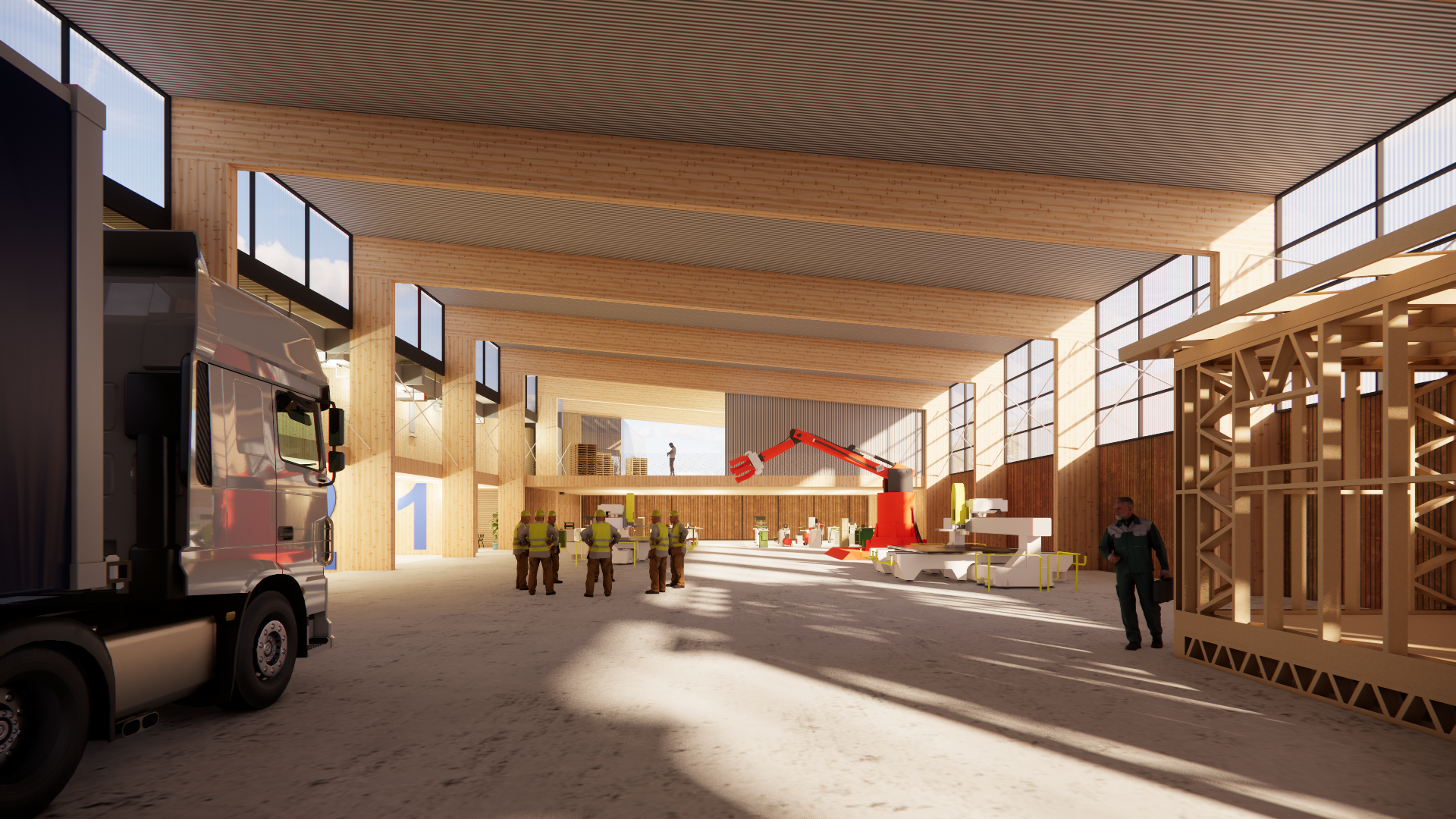
For Crough, success means the industry sees the Centre as indispensable. “It needs to become a self-sustaining model,” he says. “Industry will see it as a really valuable tool — not only to train, but also to learn through technology showcasing, industry forums, and applied research.” PrefabAUS has proposed that the new $25 million building include facilities for prototyping, conferences, and a dedicated podcast and webinar studio to amplify the Centre’s reach.
Solorzano Torres approaches sustainability from the demand side. “This is a national Centre of Excellence, so the materials, curriculum and knowledge developed here are designed to be shared across the TAFE network,” he says. “But at the same time, we have relationships with companies that are interested in the Centre because of the capability it can offer. There are companies across the ecosystem willing to invest in training and capability development if it helps them build the skills they need.”
“The government investment gives us the opportunity to create real depth in the materials and curriculum,” he adds. “As the initial funding period concludes, it will ultimately be industry’s choice whether they continue to access that capability and support it. The national value comes from the quality of what we develop and the extent to which the sector sees it as useful.”
That quality will be shaped by prefabAUS’s role as co-chair of the Centre’s Industry Advisory Panel, which will guide curriculum priorities based on real workforce needs. PrefabAUS will also provide subject matter expertise for course development, help co-design and co-deliver pilot programs, and connect the Centre to its national network of manufacturers and builders.
National Reach, Local Impact
As a nationally networked TAFE Centre of Excellence, courses developed at Heidelberg will be shared with TAFEs across the country — free of charge. “Whatever gets developed here gets shared nationally,” Crough says. “That’s how we get scale and change in the industry.”
Solorzano Torres explains that Melbourne Polytechnic is also developing the infrastructure needed to support national sharing, including an online platform that will act as a repository for industry-informed learning materials developed through the Centre. “The intention is that TAFEs across the network can access and use this content while maintaining a shared approach to quality and consistency,” he says. At the same time, some of the more advanced hands-on components may still require learners to spend time at Heidelberg, where the Centre’s showcase building will house specialised demonstration equipment and emerging construction technologies.
The scale of opportunity is significant. Solorzano Torres notes that more than 600,000 learners are currently enrolled across Australia’s TAFE system, with a substantial share undertaking trade-related training. “When you think about the workforce challenge Australia faces, the strength of the TAFE network is its reach,” he says. “The ability to develop knowledge in one place and share it across the national system is a powerful mechanism for lifting capability across the whole industry.”
Meanwhile, the broader Innovation Hub network is expanding. Crough confirms that additional nodes are developing in New South Wales and Queensland, and the published Roadmap progress reports identify emerging partnerships in South Australia’s Tonsley Innovation Precinct and at Sunshine Coast University’s Moreton Bay campus.
A Partnership Built on Values
When asked what makes the partnership work, Torres offers a reflection that captures something deeper than strategy.
“Strong partnerships rarely work on commercial logic alone,” Solorzano Torres says. “They tend to work because organisations share values and a sense of purpose. Our alignment with prefabAUS, particularly around the future of Australia’s construction industry, has been very strong. The collaboration has been constructive from the beginning, and we are genuinely excited about what we can continue to build together.”
PrefabAUS will be physically co-located with the Centre at the Heidelberg campus from March2026, with the new Centre of Excellence MMC Showcase building expected to open around 2028. For an industry racing to deliver 1.2 million new homes while addressing an 83,000-worker shortage, the partnership between Australia’s Smart Building peak body and one of its leading TAFE organisations could not be more timely.