
The Super Tradie: Why Multi-Skilled Workers Are Construction’s Next Frontier
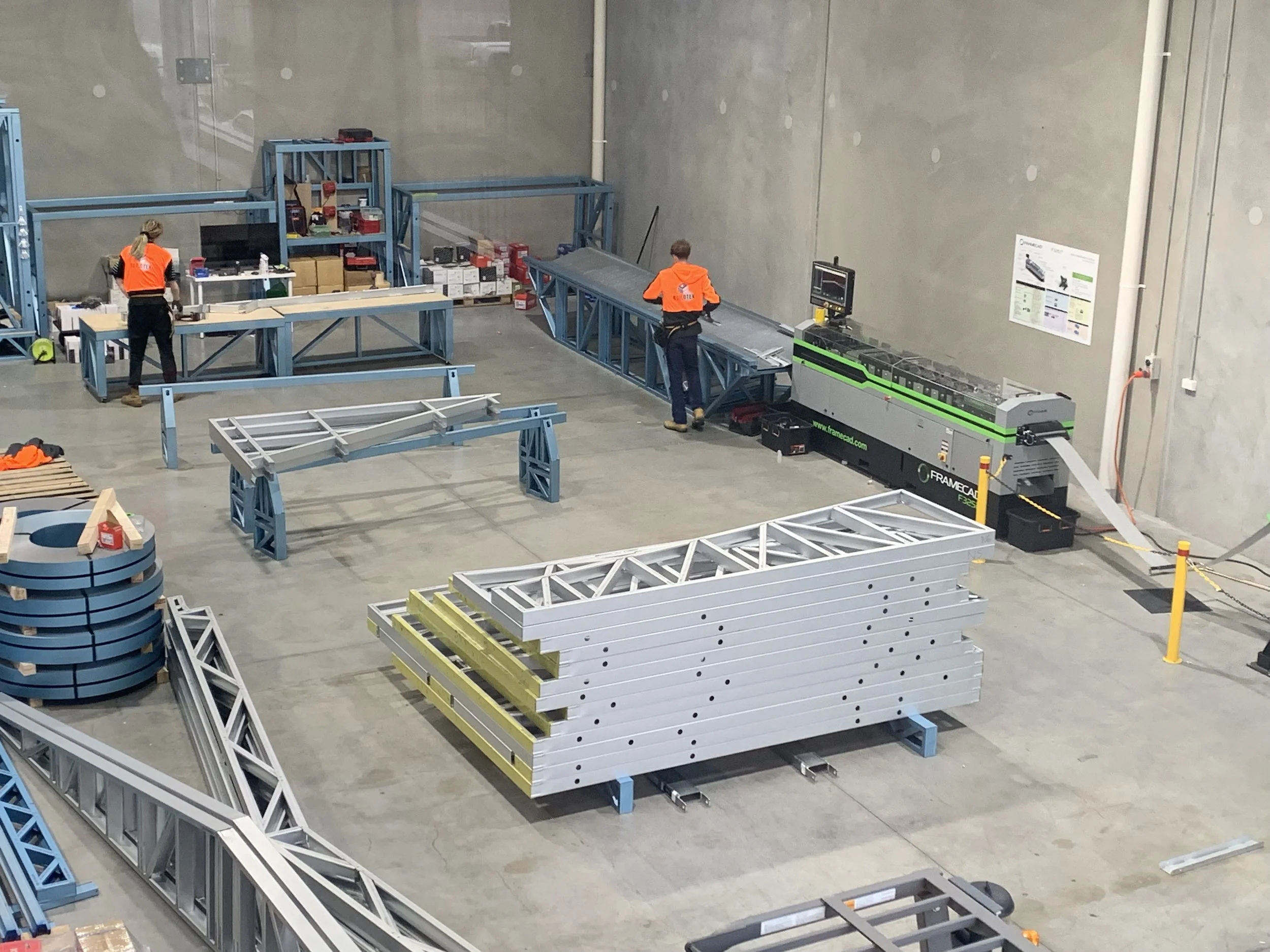
The prefabAUS Industry Roadmap envisions a future where traditionally separate trades “shade into each other at the margins.” It’s a concept that excites some, unsettles others, and could fundamentally reshape what it means to work in construction.
Damien Crough, Executive Chairman of prefabAUS, puts the proposition directly: “Why couldn’t a carpenter who is on a production line assembling parts of buildings also be installing some electrical cabling and plumbing pipework?” The idea is not to replace fully qualified tradespeople, he stresses, but to create workers with complementary skills — a carpenter who also holds a Certificate II in electrical and plumbing, for example. “We’re talking about a hybrid skill base of construction, trades, and manufacturing. You mesh those two things together — that’s where we talk about shading into the margins.”
Crough acknowledges the idea is “pretty controversial” in an industry built around licensed trades and clear jurisdictional boundaries. “There’s a bit of protectionism there, too,” he says. “But these are conversations we need to have.”
The case for change becomes vivid when you consider the reality of traditional construction. Take a bathroom pod: Crough points out that a standard bathroom involves 11 or 12 trades working within five square metres. On a conventional site, those trades cycle in and out independently, often causing damage to each other’s work. “You get so much rework and rectification because you have so many trades going in and out, causing damage,” he says. In a factory setting, where work is sequenced and controlled, that waste disappears.
Gabriel Solorzano Torres, Executive Director of Melbourne Polytechnic, frames the same issue through the lens of coordination. In traditional construction, he explains, trades often arrive on site, complete their portion of the work, and move on. “Each trade has some capacity to adjust things as they go,” he says. “They’re generally not thinking about what the other crews are doing, because the system doesn’t require them to. They come in, do their job, and leave.”
The result, Solorzano Torres argues, is a process that is inherently inefficient. “You get moments of inconsistency and deviation from the original plan,” he says. “An electrician might reroute cabling, a plumber might cut through a wall where it wasn’t intended. Individually, those decisions make sense in the moment, but collectively they create a system where the final product is the result of many separate actions rather than a fully coordinated process.”
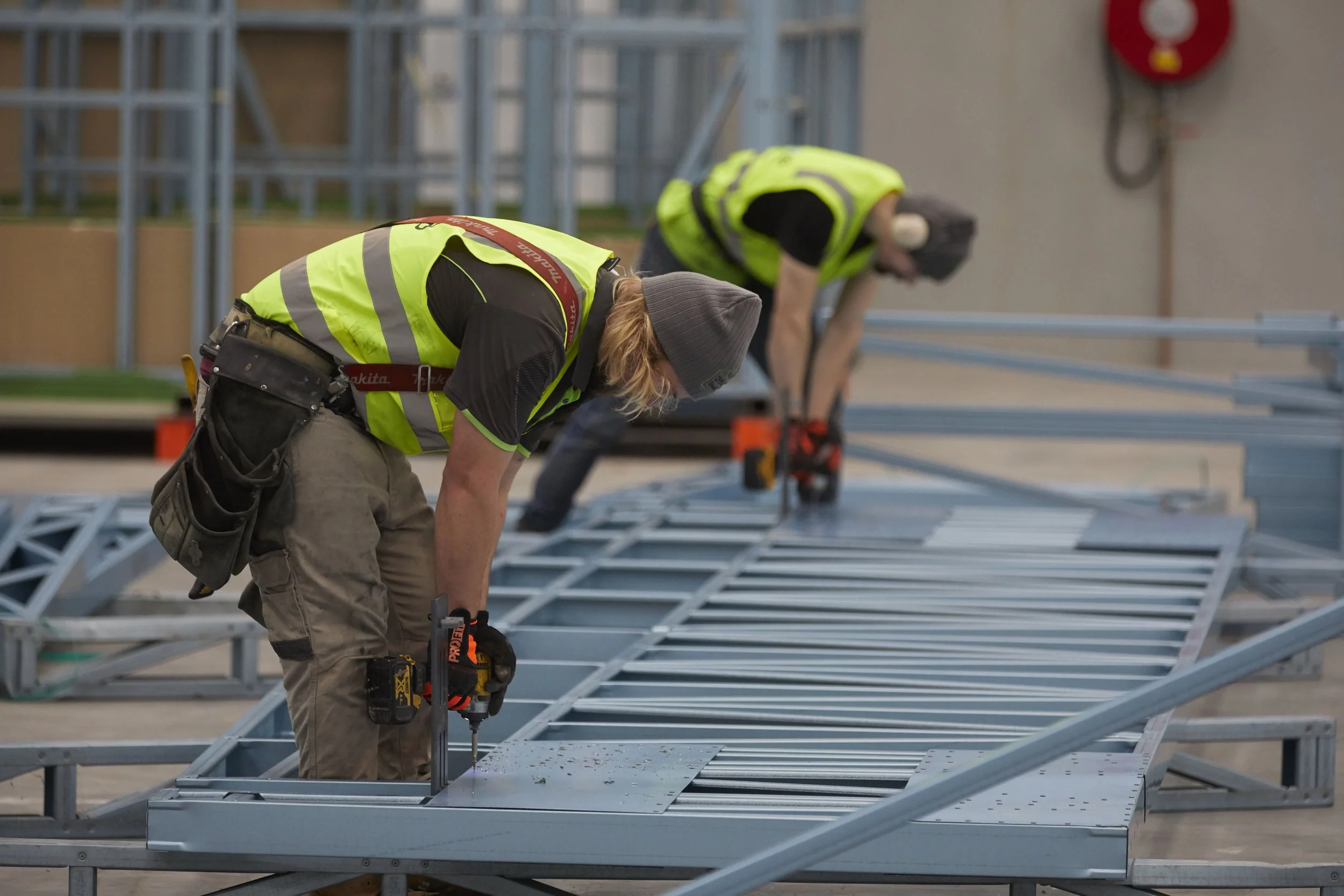
The Centre of Excellence at Melbourne Polytechnic’s Heidelberg campus aims to encourage tradespeople, construction workers and apprentices from different trades to understand each other’s roles and to collaborate . “Why not bring the trades together and help them understand how their work connects with others?” Solorzano Torres asks. “When people understand each other’s roles, they collaborate differently.”
Crucially, both Crough and Solorzano Torres argue that workers who have a broader understanding of the full construction process - including the roles and requirements of other trades - aren’t just better for factory production — they’re better, full stop. “If that tradie goes back into traditional construction, they become even more capable,” Solorzano Torres says, “because they have a better understanding of the implications of all of their decisions.”
Crough sees the cultural shift as equally important. “It’s not only about trades having knowledge of other trades. It’s also about understanding and being respectful of what the other trades need, how their work affects yours, and how you can all support each other.”
The conversation around multi-skilling is still in its early stages, and the industrial relations dimensions are real. But as Australia’s housing crisis demands faster, higher-quality construction at scale, the case for a more capable, collaborative workforce is becoming difficult to ignore. The super tradie may be controversial, but the problems they’re designed to solve are not.